

At a time when oil prices are surging, inflation risk is rising, and stress is already building in private credit, energy today makes up only about 4% of the S&P 500, near the all-time low reached during the pandemic in 2020:
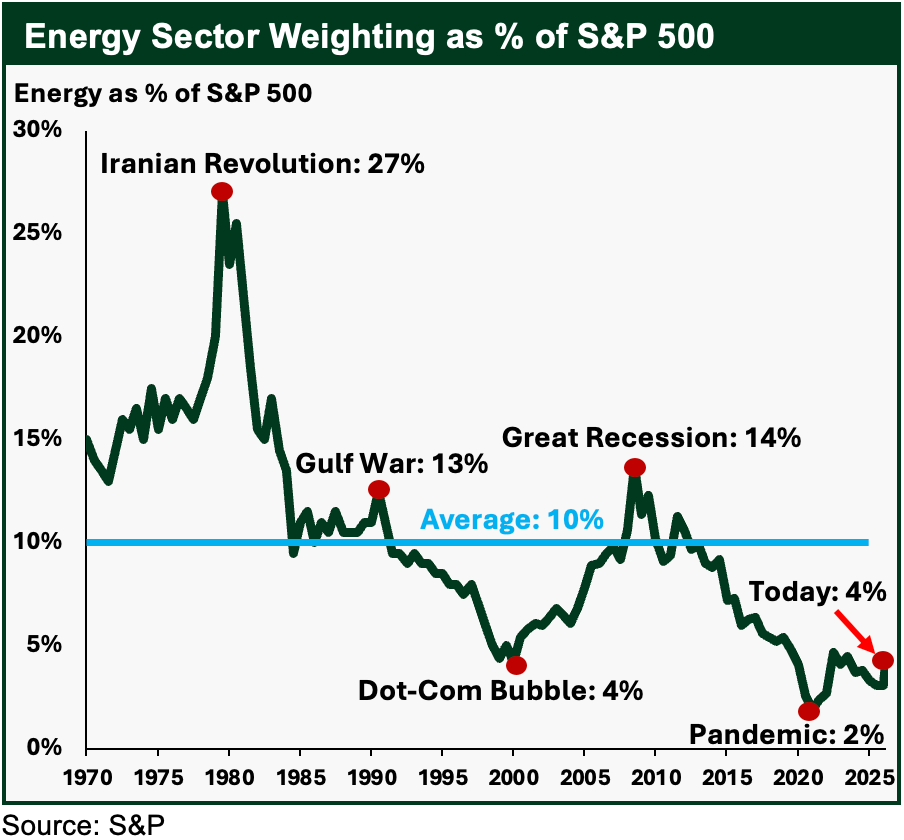
Historically, energy has represented a much larger share of the index. At current levels, most investors have very little exposure to the sector. In practical terms, energy risk appears structurally under-owned.
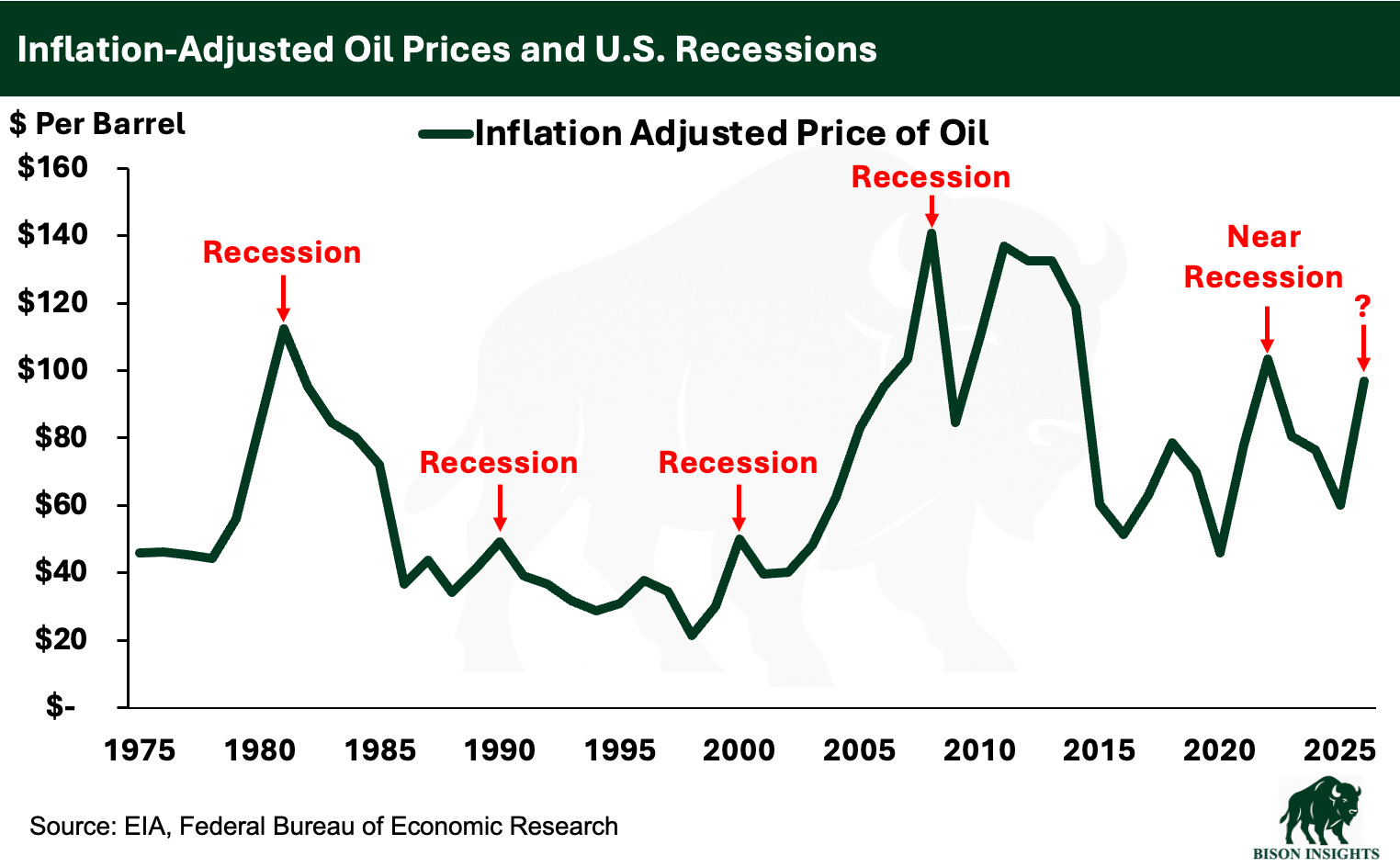
By “energy risk,” I mean that periods of rising oil prices have historically created pressure on the broader economy. Higher oil prices raise input costs across industries and compress margins for most businesses. For that reason, rising oil prices have often coincided with recessions:
The good news is that a two-week ceasefire and the reported reopening of the Strait of Hormuz are clearly positive for the many sectors hit by the disruption, which is welcome news not just for oil consumers, but for a wide range of industries. The Strait is critical for LNG, helium used in semiconductor manufacturing, and petrochemical feedstocks used in a variety of other products.
At the same time, it remains unclear whether the Strait of Hormuz is truly and durably on the path back to normal, as attacks have continued after the announcement and ships are mostly still not going through the Strait - despite the constructive statements being made by President Trump and others.
Even in a best-case scenario, oil flows will take at least several months to normalize, after which the market would only return to the constructive underlying fundamental oil market setup that existed before the disruption, as I discussed in my latest article.
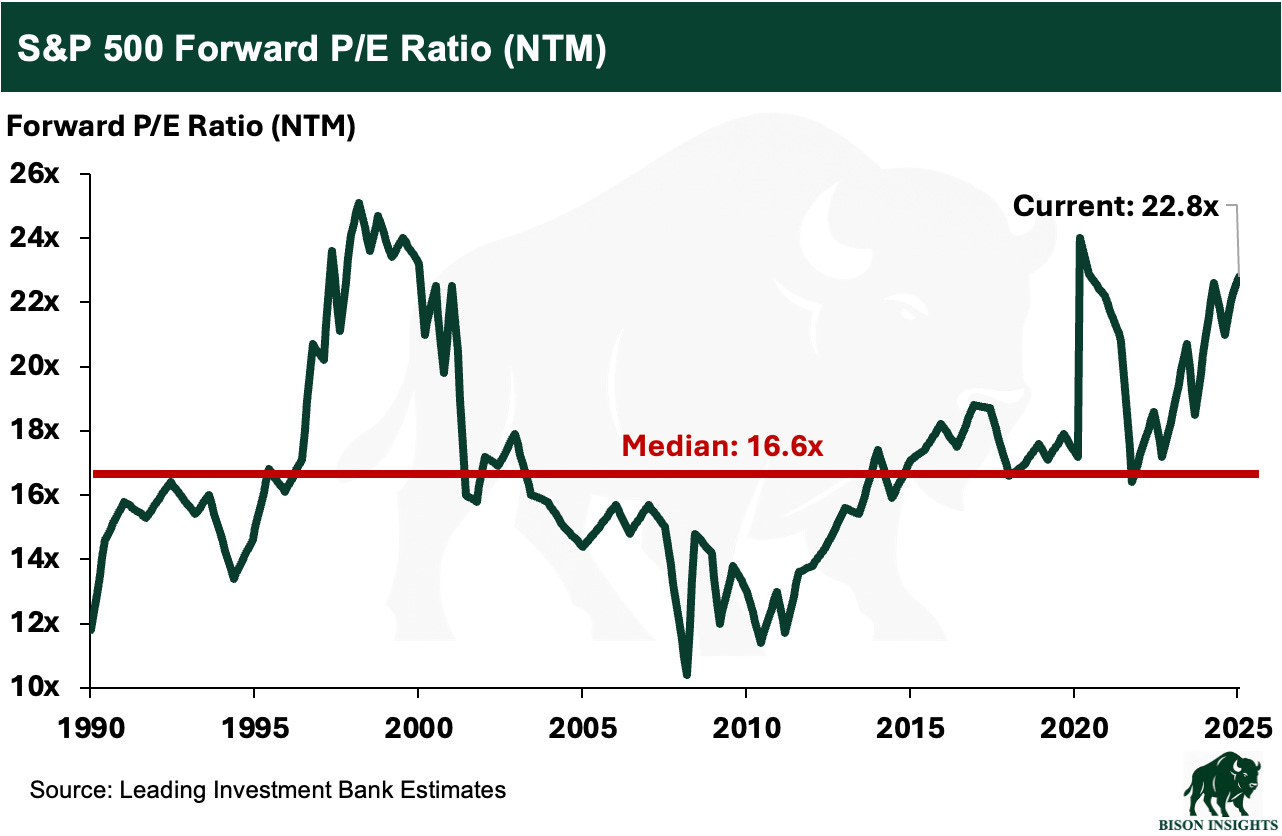
The disruption that began in late February will begin showing up in upcoming Q1 financial results across the broader market and will continue to affect second-quarter results. With WTI oil still around $95 per barrel, the broader stock market, which is already trading near record-high valuations, is vulnerable if economic growth slows more than investors expect:
Against this backdrop, there is one security in particular that offers a very inexpensive hedge against a broader market downturn. Historically, this security has tracked the S&P 500 closely during drawdowns — but the key difference is that put options on this security cost only a fraction of comparable protection on the S&P 500.
If the historical correlation holds, at-the-money mid-October puts on this security — with roughly six months of protection — could generate payoffs of 500% to 3000%+ depending on the extent of the market decline, more than double the return of buying SPY puts directly:
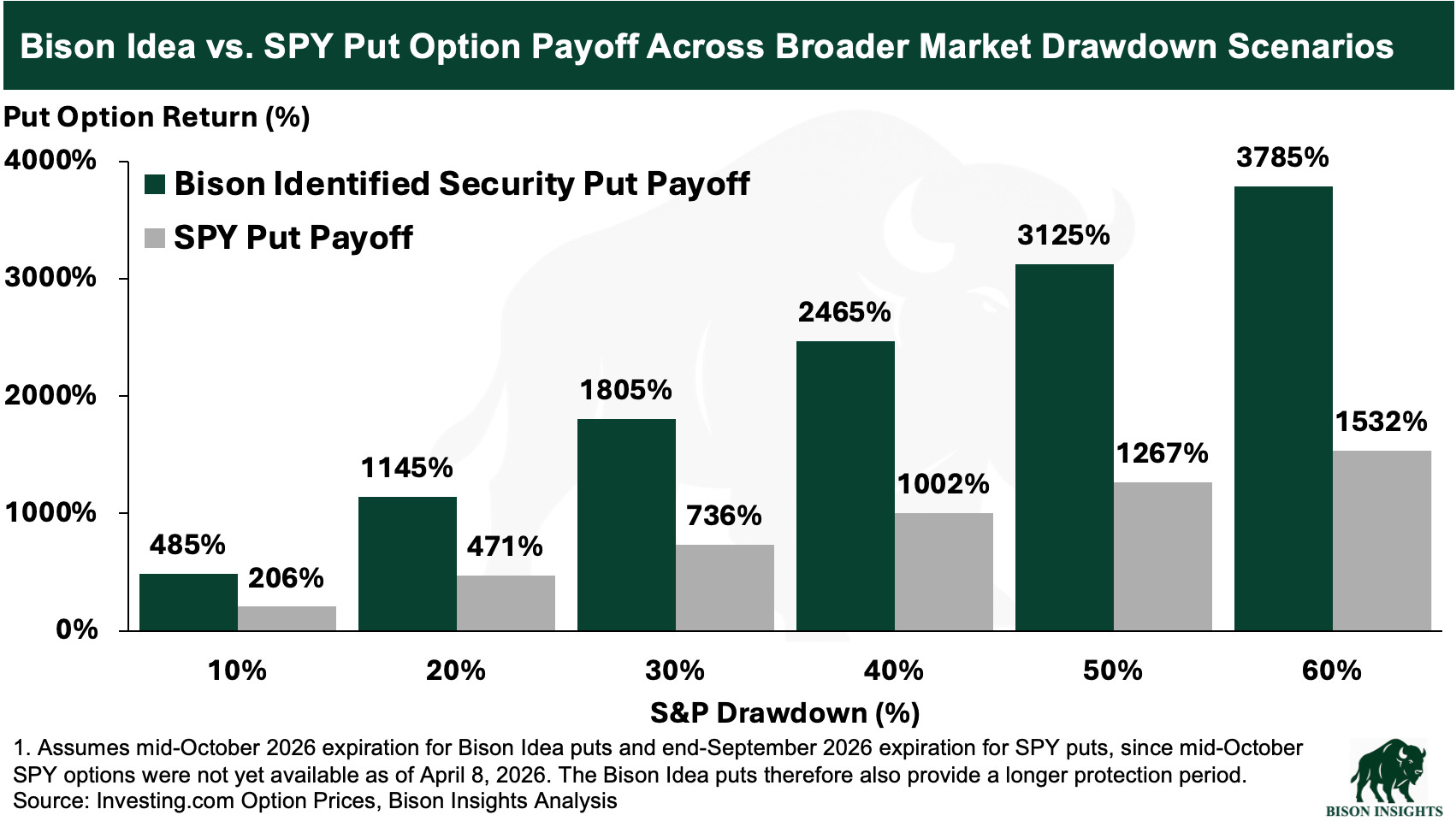
The result is that if the broader market experiences a large decline, investors can achieve meaningful downside protection with a much smaller allocation to puts on this name.
An additional tailwind to this idea is the growing stress in private credit. Over the last several years, capital has poured into illiquid private loans in search of yield. Now that defaults are rising and confidence is slipping, investors are heading for the exits. Funds including Barings, KKR, Apollo, Blue Owl, Ares, and BlackRock have capped or limited withdrawals in parts of their private credit platforms after elevated redemption requests, with billions of dollars in withdrawal requests now stuck behind fund gates:
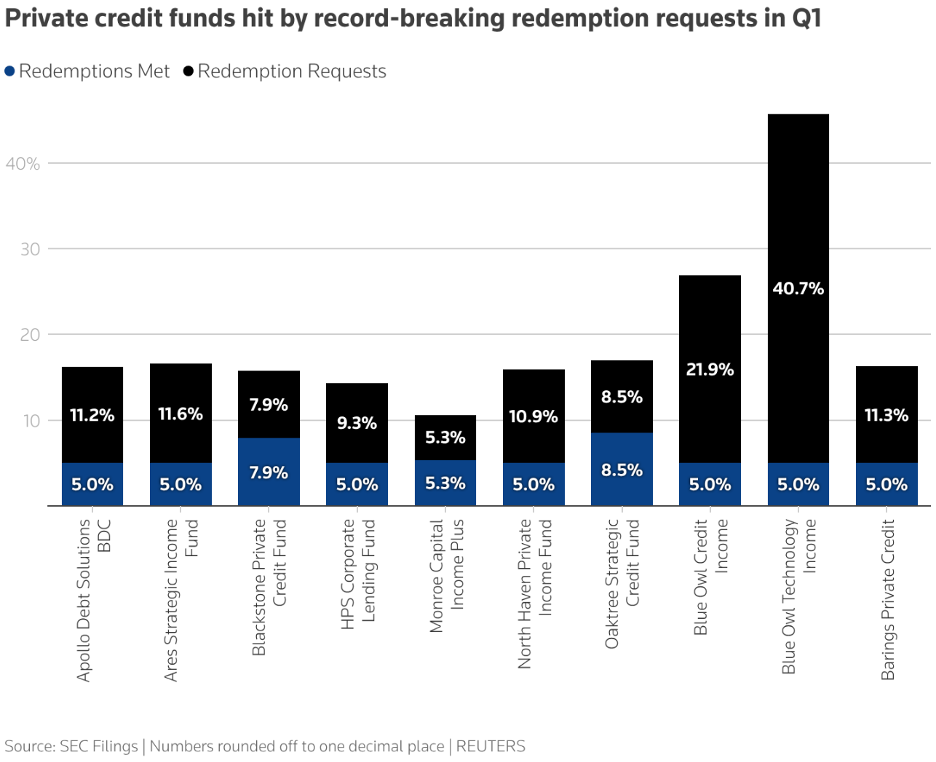
If investors and fund managers are forced to raise cash by selling more liquid credit exposures tied to the same risk bucket, the underlying of the security I’m writing about could come under even greater pressure, increasing the potential payoff of the hedge.
Likewise, if higher war-related spending and higher oil prices increase inflation and push interest rates higher, that would be another negative for this security and another way for the hedge to work. In other words, they offer several ways to “win” by hedging against multiple major risks at once, at an ultra-low price.
Disclaimer: This is for informational and educational purposes only. This is not an offer, solicitation, or investment recommendation. Please consult an advisor and do your own diligence.
