
Everyone Said Oil Would Go To $50. WTI Oil is Now $100+. What If Oil Goes to $150 or $200?
High oil prices could mean huge upside for my favorite oil-levered stocks

We’re now 10 weeks removed from the day the world changed - the Strait of Hormuz closure on February 28, 2026.
While some oil barrels have been re-routed, approximately 12 million barrels per day of oil production remains effectively shut in. In a commodity market that clears at the margin, where even a 1 million barrel per day deficit or surplus can materially influence prices, a 12 million barrel per day disruption is unprecedented:
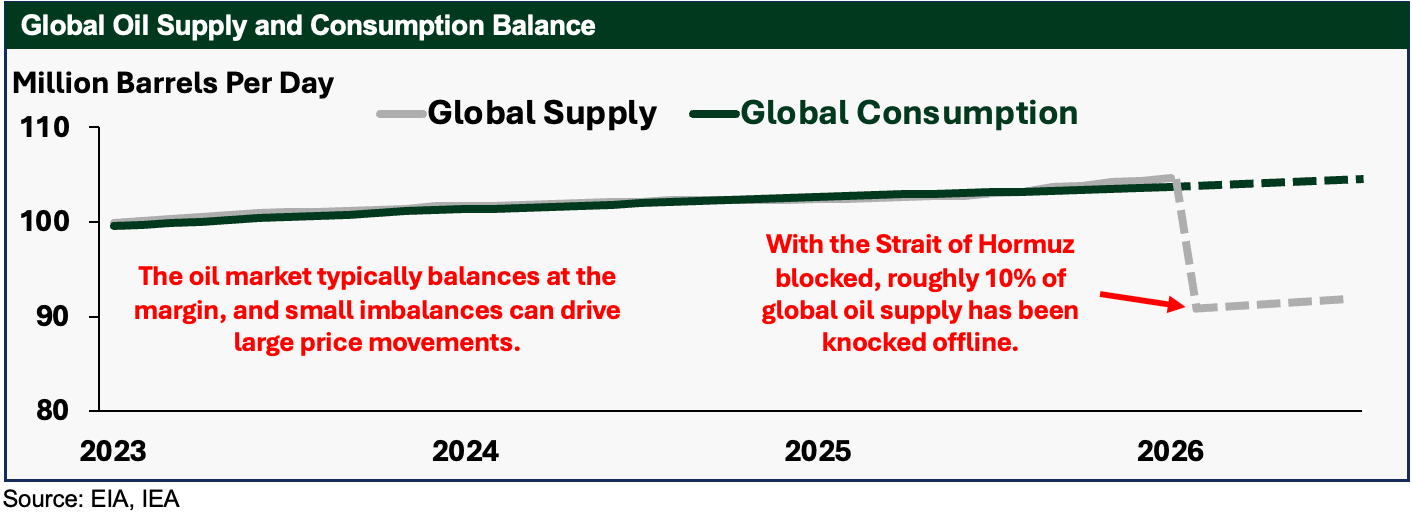
When the disruption began, the market had buffers from readily available inventories, including in-transit and on-water oil barrels that were a stopgap for the disrupted supply.
But as those buffers have been worked through and with trade routes have adjusted, we’re now starting to see large draws from commercial inventories and SPRs. Last week, the U.S. drew 24.1 million barrels of oil and petroleum liquids from storage (including the SPR), the third largest weekly draw since the EIA began tracking the data in 1990:
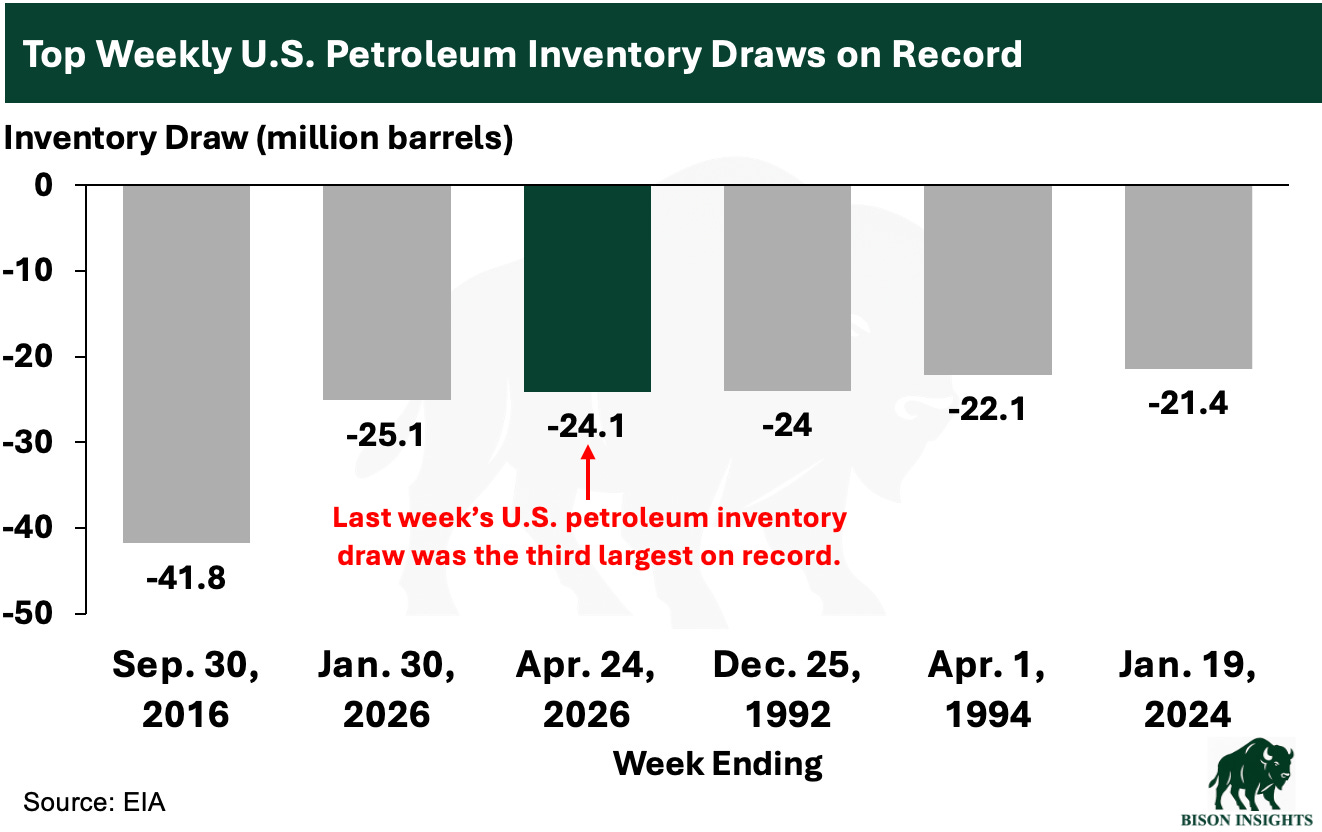
These visible, onshore U.S. inventories are especially relevant for North American producers because WTI oil is priced in the U.S, with the market physically clearing here. As those inventories tighten, the physical market clearing dynamic may be the catalyst for much higher prices.
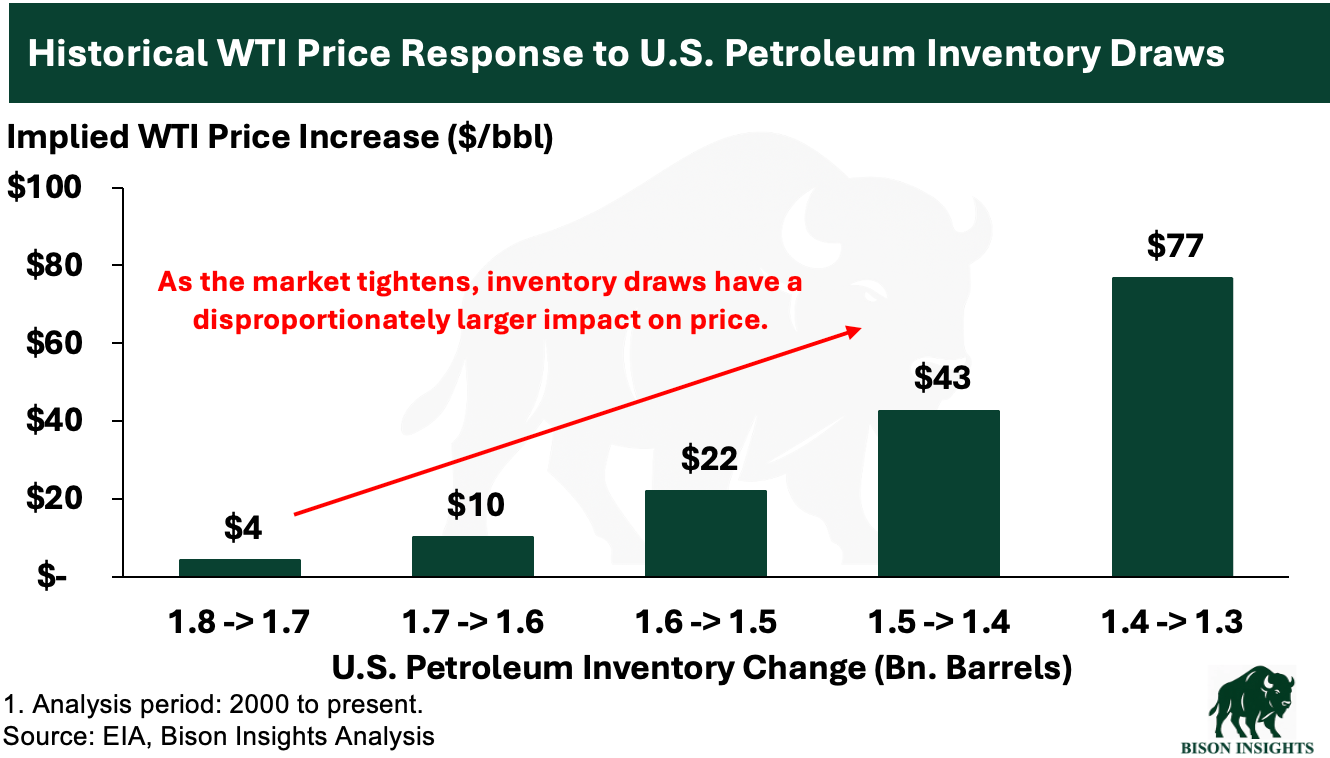
As discussed in “Oil Prices Are Crashing - Time to Count Barrels and Track Flows to See What’s Next,” the relationship between oil prices and inventories is not linear. As inventories get tighter, each additional barrel drawn from storage historically has had a larger impact on price:
Using this historical inventory-price correlation as a guide, oil prices may quickly be heading toward all-time highs:
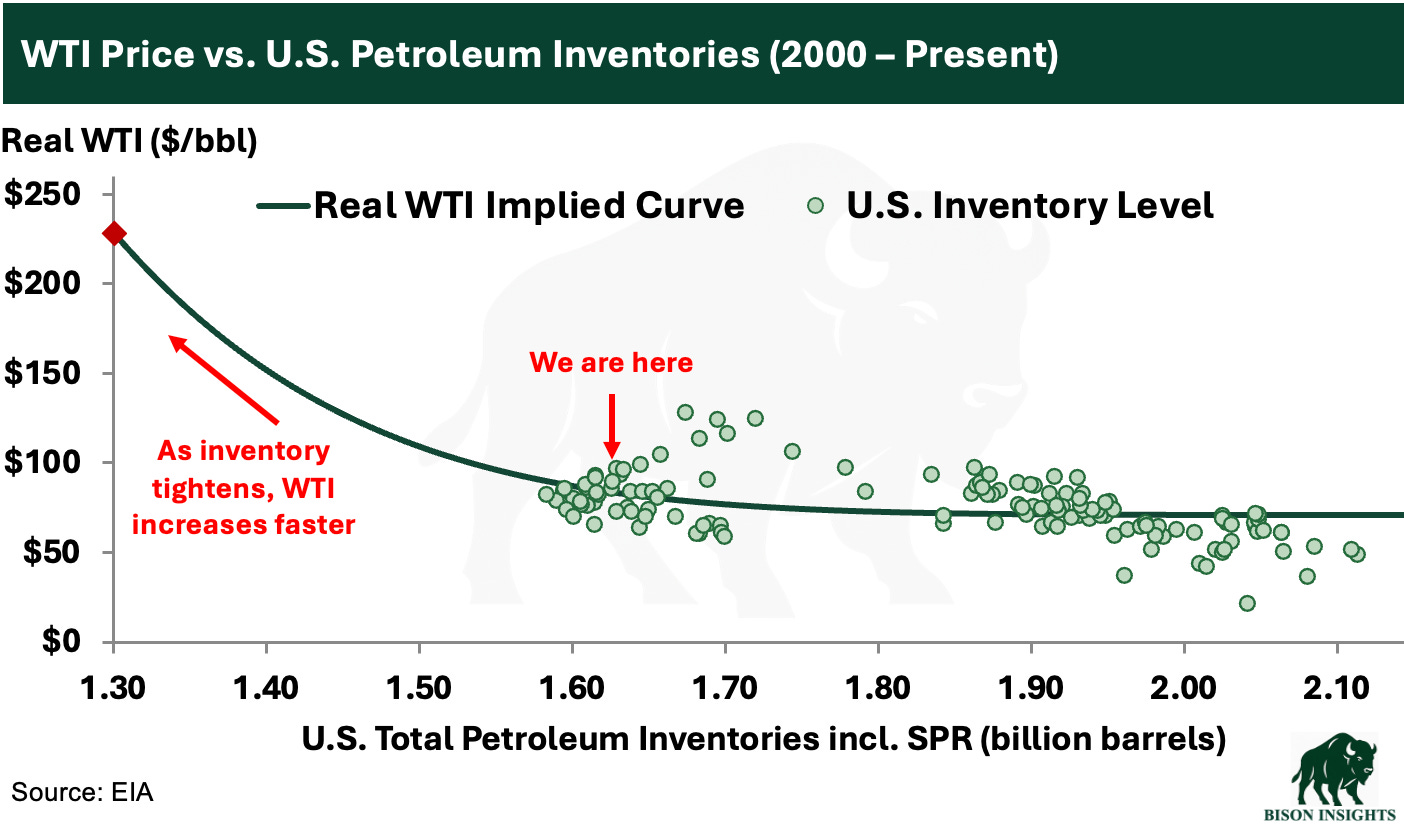
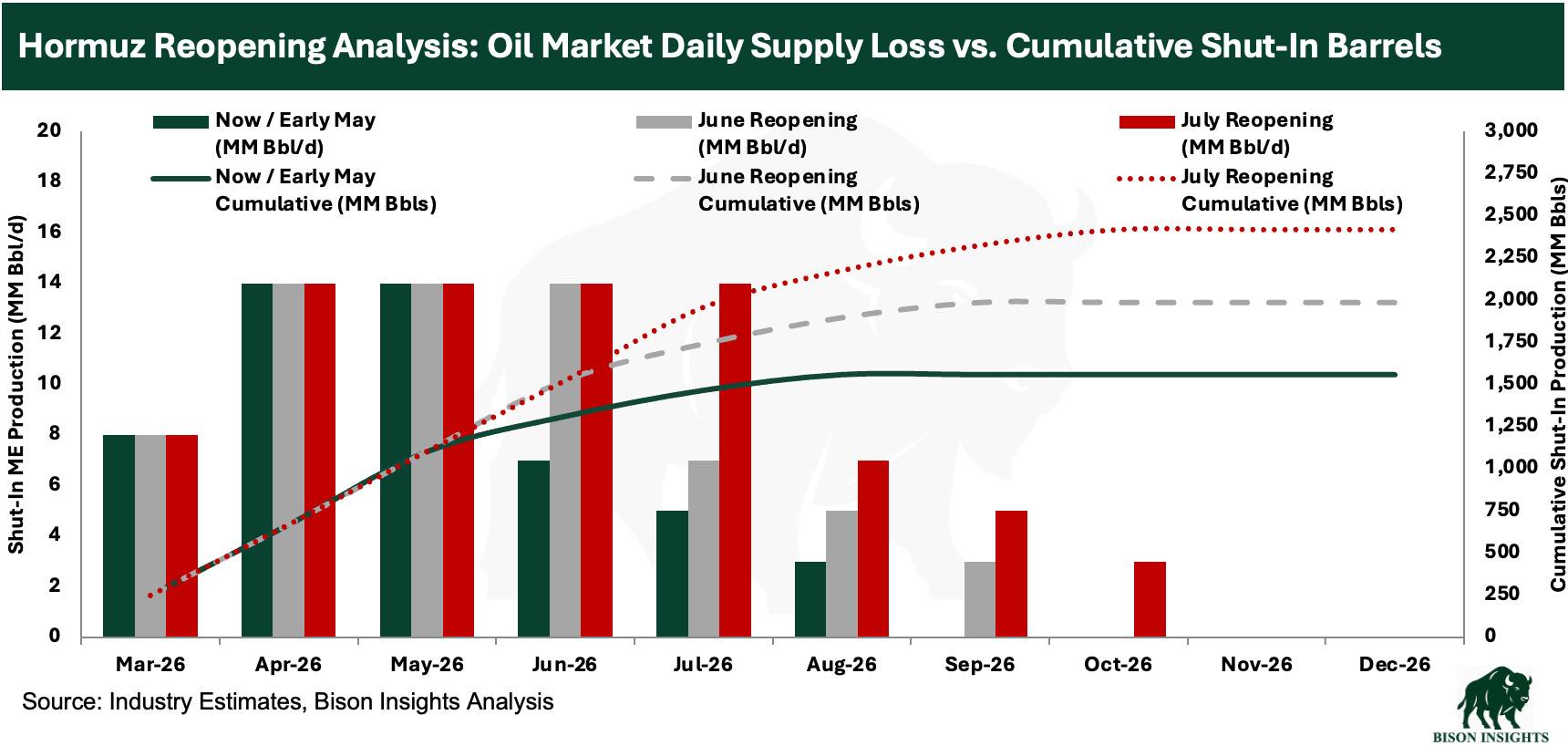
Even if the Strait reopened today, U.S. and global inventories would continue declining for an extended period. Trapped and rerouted ships would need time to complete their voyages and return to the Middle East, delaying the export capacity needed for shut-in production to come back online, which itself would then take time. As a result, even an immediate reopening would leave the market dealing with cumulative inventory losses for at least several months:
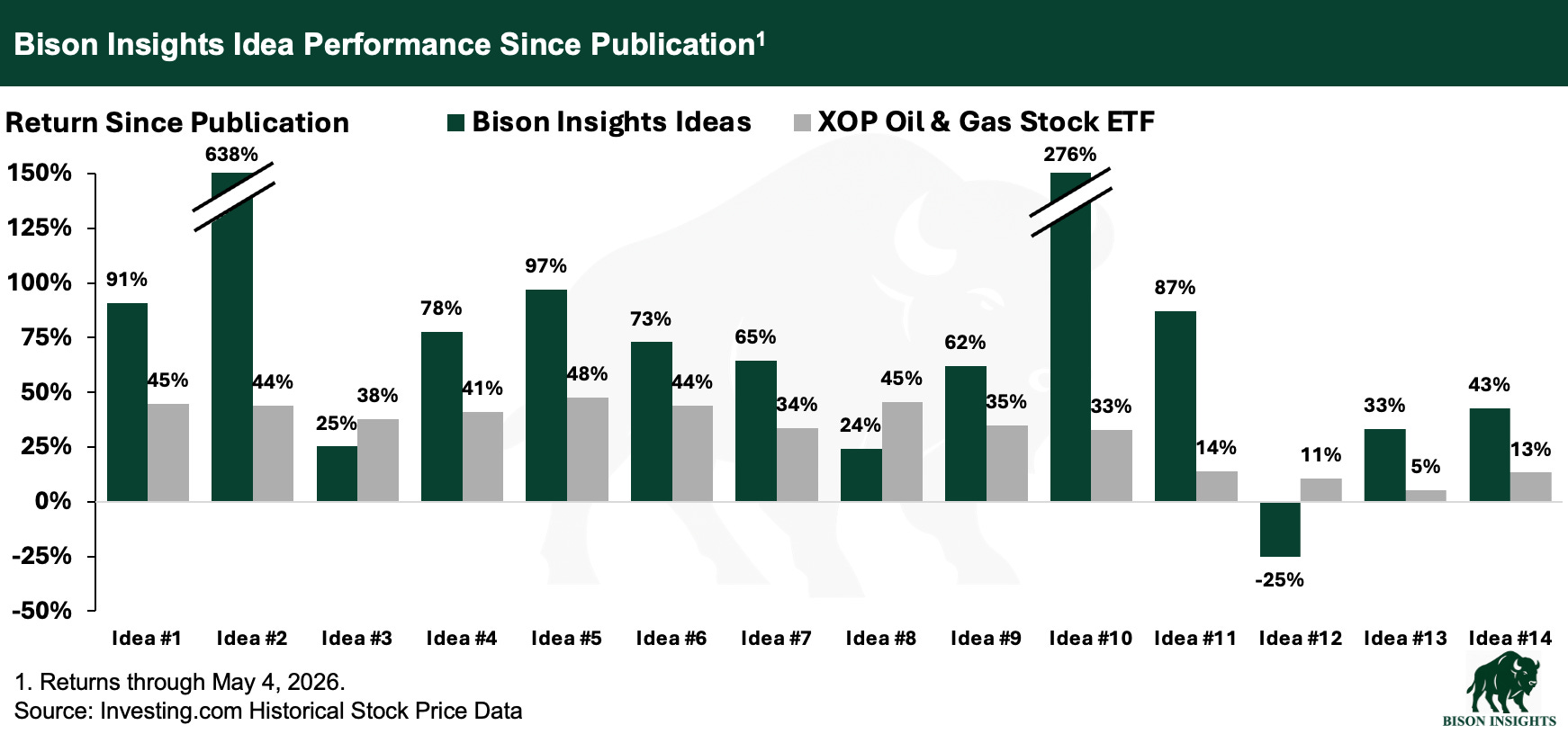
Considering that oil prices may be going much higher, it is timely to revisit the oil-exposed ideas I’ve shared here on Bison Insights. These stocks have performed well since publication - and they potentially have much more upside ahead:
Disclaimer: This is for informational and educational purposes only. This is not an offer, solicitation, or investment recommendation. Please consult an advisor and do your own diligence. Past performance may not be indicative.
