


To understand how the conflict with Iran may resolve, I review the fundamentals of the conflict, analyze Trump’s dealmaking style, and review the past deals he’s negotiated as president. These help provide a framework for how Trump is approaching Iran now. This outcome could have a major short-term impact on oil prices and related equities.
Trump’s first book, The Art of the Deal, is a useful guide for this, and is referenced throughout this article.
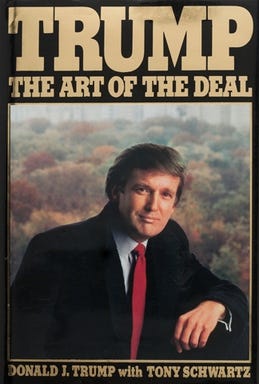
The book opens with the following paragraph:
“I don’t do it for the money. I’ve got enough, much more than I’ll ever need. I do it to do it. Deals are my art form. Other people paint beautifully on canvas or write wonderful poetry. I like making deals, preferably big deals. That’s how I get my kicks.” — Donald Trump, Art of the Deal
Trump likes making deals. And he prides himself on making good ones. Nearly 40 years later, Trump and his team are negotiating the biggest deal of his life. His objective is to stop Iran from being a threat to the U.S. and the region:
“Our objectives are clear. First, we’re destroying Iran’s missile capabilities… and their capacity to produce brand new ones — pretty good ones they make. Second, we’re annihilating their navy… Third, we’re ensuring that the world’s number one sponsor of terror can never obtain a nuclear weapon… And finally, we’re ensuring that the Iranian regime cannot continue to arm, fund, and direct terrorist armies outside of their borders.”
To achieve these objectives, on February 28, 2026, the U.S. and Israel launched Operation Epic Fury - a coordinated strike campaign against Iran’s key military assets and nuclear infrastructure.
Iran’s Response
The difference between Operation Epic Fury and the U.S. strike last June is that the strike last June was narrower and aimed at Iran’s nuclear facilities. This time, the strikes were designed to substantially weaken the regime itself, and even killed Iran’s Supreme Leader (who has now been replaced with his son). Instead of trying to beat the U.S. and Israel in a conventional war, Iran went straight to its strongest form of asymmetric leverage: closing the Strait of Hormuz.
In his book, Trump defines leverage as the following:
“Leverage is having something the other guy wants. Or better yet, needs. Or best of all, simply can’t do without.” - Donald Trump, Art of the Deal
By closing the Strait, Iran created leverage because it created a need: an open Strait to prevent a much broader economic crisis. A closed Strait of Hormuz is now Iran’s biggest source of leverage, so they’re not likely to give it up without real concessions from the U.S. side.
Why We’re At An Impasse
Iran appears to be asking for the one concession the U.S. has repeatedly said it won’t give: the right to enrich uranium domestically.