
OPEC+ Production Increases and Spare Capacity Audit - Oil Market Implications
My meeting takeaways below. OPEC’s quota increases are not reactive policy moves; they are part of a broader strategy to map true spare capacity and position the market for the next up-cycle

One of the more puzzling developments in oil markets this year has been OPEC+’s rapid unwinding of production cuts at a time when oil prices are at their lowest levels in nearly five years.
The group clearly benefits from higher prices, and its stated purpose is to “stabilize” oil markets. So why would OPEC+ keep production constrained for several years when prices were much higher, only to increase supply now, when prices are lower?
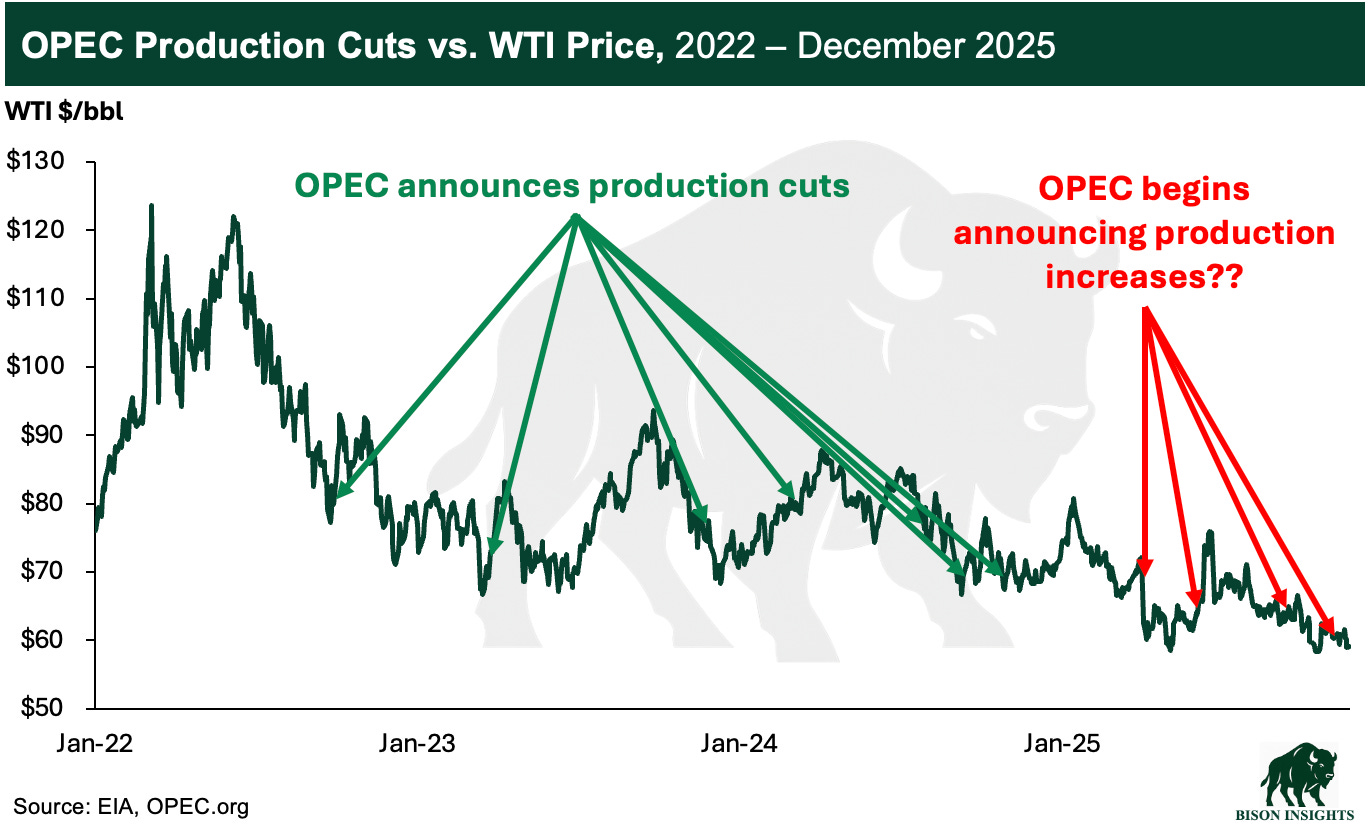
In oil markets, as in all commodity markets, it’s important to skate to where the puck is going, not where it is today. Prices are currently low, but OPEC is signaling that they see robust demand ahead, and that they are increasing production now to try to ensure stable, modestly high prices in the future. Oil prices tend to be bimodal, and OPEC’s long-term interests are best served when prices sit between the extreme end ranges of supply-destruction pricing and demand-destruction pricing, or over $100 per barrel:
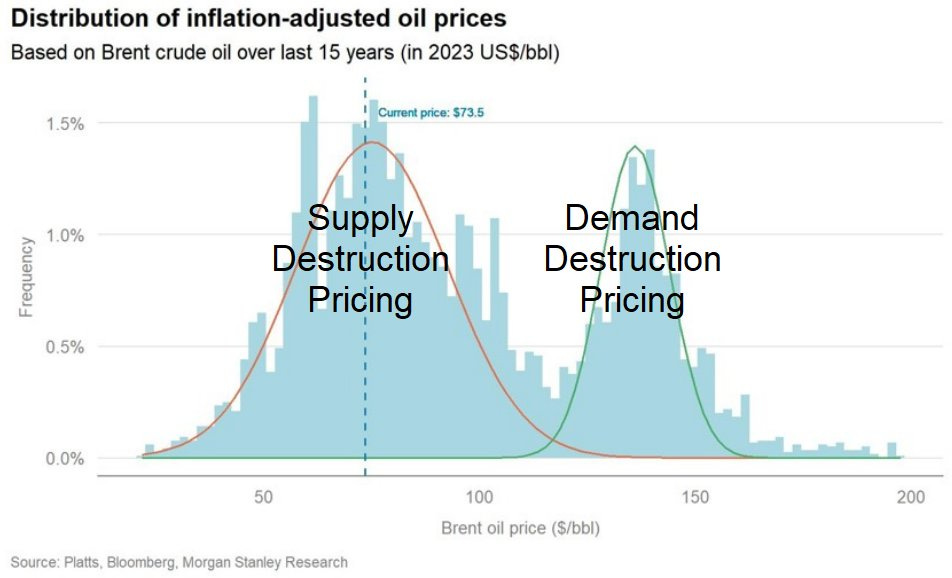
While extremely high prices obviously benefit OPEC+ member countries in the short term, the ensuing demand destruction and supply builds that follow are damaging to the group over the long run. Their recent actions and statements suggest they are trying to avoid that extreme scenario by adding supply now, into the wave of demand that is now starting to show up in the data - indicating that we’re in the early stages of the next up-cycle in oil. This broader context helps frame a special OPEC briefing I attended on Sunday.
I joined a small group invited by OPEC+ leadership to hear their presentation on a new study they’re performing to assess the Maximum Sustainable Capacity (MSC) of member countries that will serve as a reference for establishing 2027 production quota baselines. HRH Prince Abdulaziz bin Salman opened the session, and OPEC Secretary General Haitham Al Ghais outlined how the organization plans to evaluate sustainable production levels across member countries.
It was an unusual, fascinating conversation that gave me a clearer view of where OPEC policy is heading and sharpened my thesis on why they unwound production cuts so quickly this year, as well as what that means for the oil market over the next several years.
