
The Small-Cap Advantage, One Year Later
Bison Insights' first year, outperformance from focusing on overlooked stocks

One year ago, I launched Bison Insights, a publication focused on mispriced securities with under-appreciated asset value and upside potential - particularly overlooked and misunderstood oil and gas investments Since then, I’ve published 17 investment ideas, along with key updates and macro perspectives.
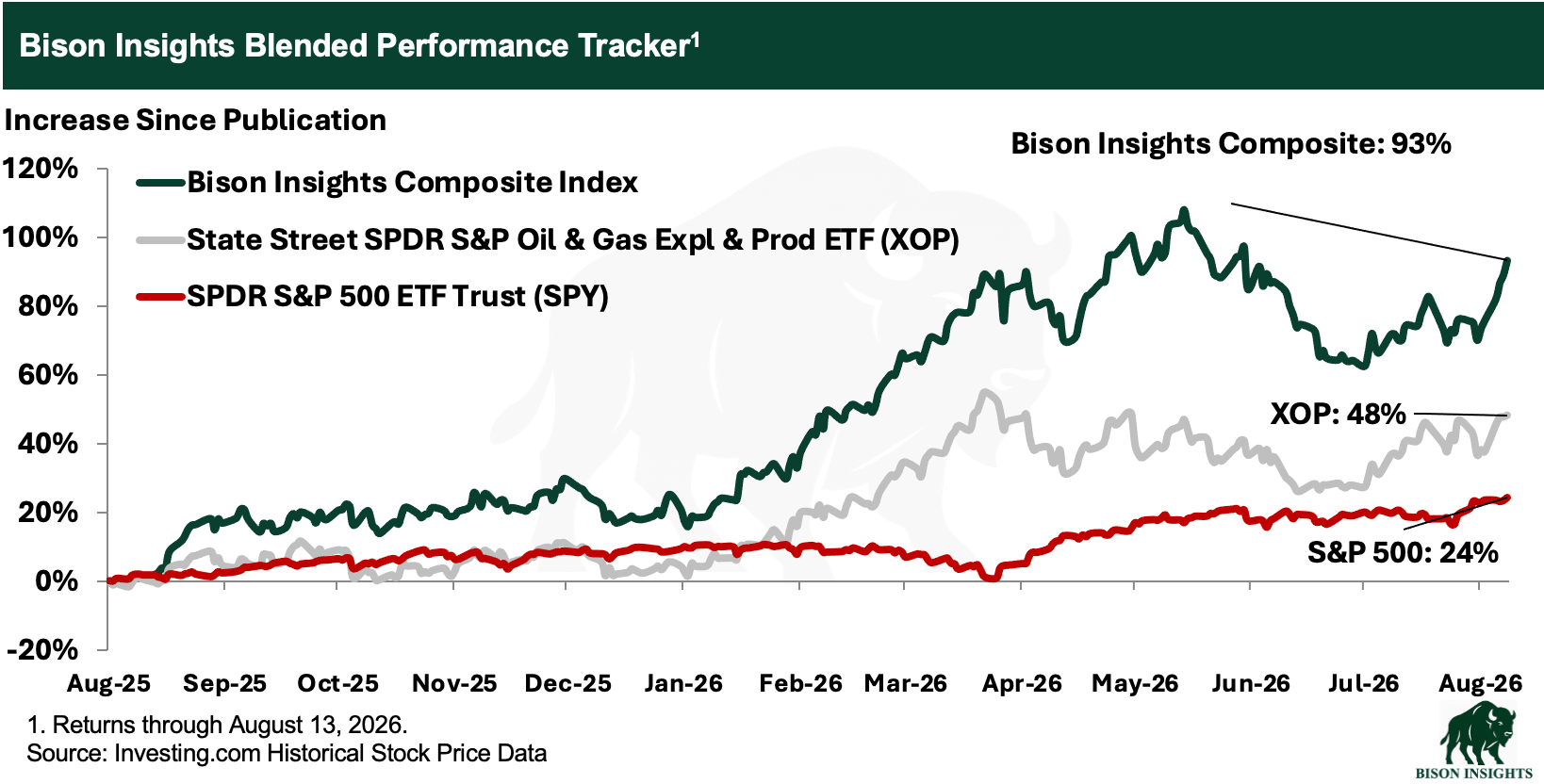
So far, the Bison Insights composite index of these ideas has increased by 93% since publication, compared to 48% for the XOP benchmark and 24% for the S&P 500:
I’ve spent nearly two decades professionally investing in energy. Bison Insights provides a real-time look at how I analyze the market, identify opportunities, and update my views as the facts change.
Many of the opportunities I find are in smaller companies, where I think individual investors have an advantage. The financial services industry downplays this advantage, because it isn’t the most profitable for banks, brokerage firms, and fund managers to encourage sub-scale investing. This enhances the opportunity, making it possible to outperform to the degree shown above - while not guaranteeing future performance.
Why Small-Cap Stocks Can Outperform
Fama and French are famous for their work on efficient markets, but few know that they found that smaller stocks historically outperformed larger ones over long periods. Jeremy Siegel made a similar observation in Stocks for the Long Run, while later research from AQR found that the small-cap premium became considerably stronger after controlling for low-quality companies.
This research is not well publicized, but it shows that small caps offer a particularly attractive opportunity set when combined with intelligent active selection, especially over longer time frames.
One key reason is that many small companies are simply too small to matter to large investment funds and brokerage firms. For these funds, spending significant time researching a company that can only become a tiny position, or publishing reports on companies that few people care about, isn’t worthwhile. Smaller investors don’t face the same constraint. A company can be too small for Wall Street to care about while still being large enough to materially affect our returns.
As a result, fewer investors may be closely following these companies, and new information can take longer to be reflected in their share prices. This creates opportunities for investors like me who are willing to do the work to identify strong businesses that the broader market is overlooking.
How Bison Insights Identifies Cheap Stocks That Become Winners
A low valuation by itself isn’t enough. I’m generally looking for companies where the stock is cheap and there is a clear path for intrinsic value to increase or for the market to recognize value that is already there.
The Bison Insights ideas that have worked best so far have fit into a few recurring themes:
Cash Flow Is Inflecting Higher
One of my favorite setups is a company whose current financial results look weak, but where the underlying business is beginning to improve.
This can happen when underutilized equipment goes back to work, a new project begins generating revenue, margins recover, or production starts growing. Because many investors and screening tools focus on trailing results, the stock can stay cheap even as future cash flow is improving rapidly.
The opportunity is enhanced when I identify that inflection before it becomes obvious in reported earnings.
Debt Paydown Increases Equity Value
Another setup I look for is a cheap company generating enough free cash flow to steadily reduce debt.
Under the Modigliani-Miller framework, if enterprise value stays constant, each dollar of debt repaid effectively shifts a dollar of value to the equity. This shift can have an especially large impact when the starting equity value is small relative to the debt load.
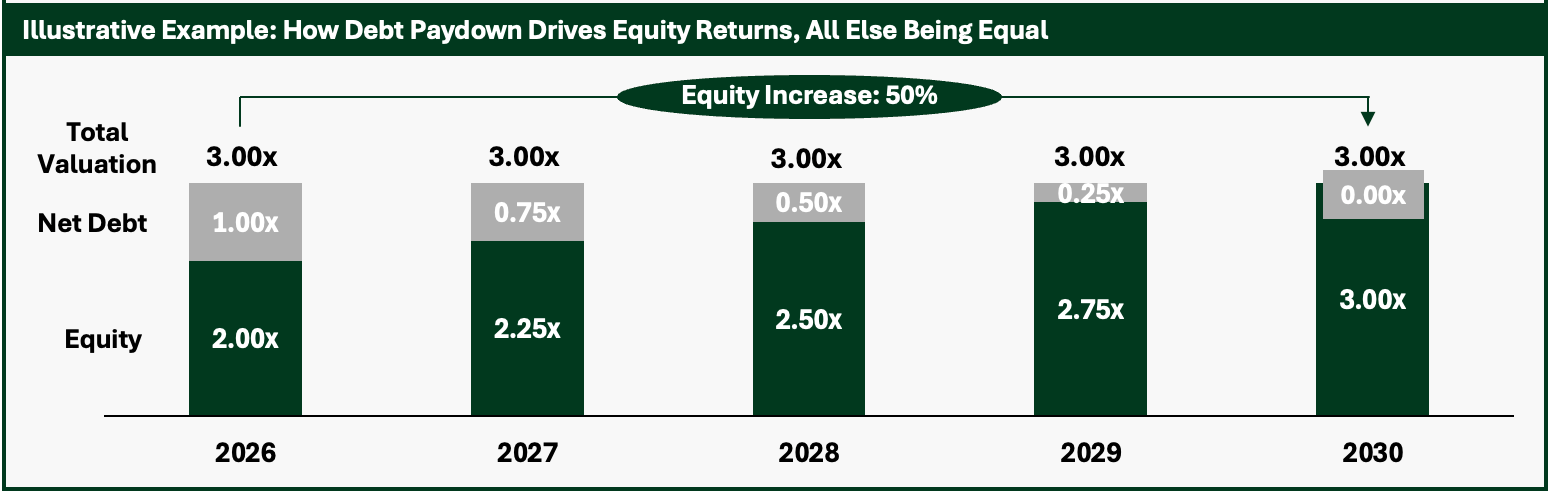
There can also be a second benefit: as leverage falls, the company becomes less risky, which can lead investors to assign it a higher valuation multiple, sending the stock price even higher in a non-linear manner.
The Market Is Missing Part of the Value
Sometimes a company is cheap because the market is focused on one part of the business while assigning little or no value to another asset that the company also owns.
The various ways to ‘win’ with these investments include the other asset beginning to generate cash, a transaction establishing what it’s worth, or a buyer acquiring the company at a premium.
The Key Differentiator Is Selectivity
Across each of these profiles, the common theme is the same: buying at a discount is only the starting point. I also want a reason (and ideally, several reasons) for intrinsic value to grow or for the valuation gap to eventually close.
Talking with company leaders and people in the industry helps me follow business conditions in real time. For example, I’ve interviewed a number of CEOs and other C-suite executives from the companies I’ve written about. These interviews provide me more information on the company, and they also show me whether management is capable and thinks like an owner.
The first year’s results suggest this process has worked. The composite didn’t rise just because small energy stocks did well, or because of the increase in oil prices. Bison Insights succeeded by finding value that the market had missed.
Looking Ahead
The full one-year review explains what drove each investment and where every thesis stands today.

The next year may not look like the first. But Wall Street still ignores many small companies. That should keep creating opportunities.
Paid subscribers receive the full research and regular updates. They can also hear directly from company leaders and join an active subscriber chat.
To celebrate the first anniversary of Bison Insights, I’m offering new paid subscribers 25% off for a limited time.
Thank you to everyone who has read and subscribed over the past year. If you’d like to see the energy investment ideas I find most compelling and why I think they’re mispriced, consider upgrading to a paid subscription.
Disclaimer: This is for informational and educational purposes only. This is not an offer, solicitation, or investment recommendation. Please consult an advisor and do your own diligence. Investments incur risk of loss. Past performance is not indicative of future results.