
This Week in Oil: Deal or No Deal?
Deal promised by this past Wednesday, attacks on tankers today

Oil sold off more than 7% this week as the market once again priced in a reopening of the Strait of Hormuz, with WTI settling Friday at $78.18 after Treasury Secretary Bessent said early in the week that a deal to open Hormuz with freedom of movement could come as soon as Wednesday.
It didn’t. Instead, Iranian state media published a draft plan on Thursday that would ban U.S. and Israeli ships from the strait entirely, bar other nations from transiting until “compensation” is paid, and impose penalties equal to 20% of cargo value on violators. Iranian officials also warned that the route agreement being finalized with Oman will not fully reopen the strait. Oil rallied Thursday and Friday as the market digested yet another false dawn.
The flow data tells the same story. Here’s the latest tanker map from Bloomberg’s Javier Blas:
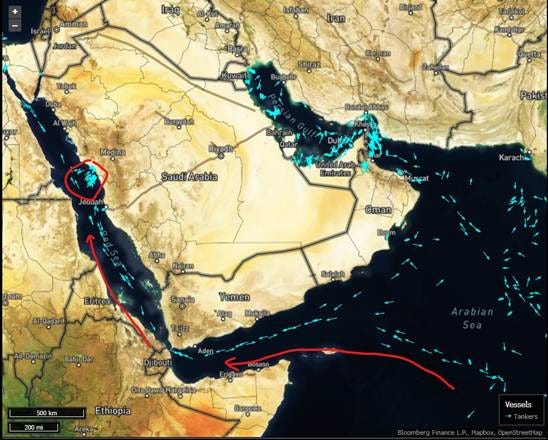
Source: Javier Blas / Bloomberg
Whatever gets signed, Iran retains control over how much oil moves through Hormuz - and it is using that control as leverage.
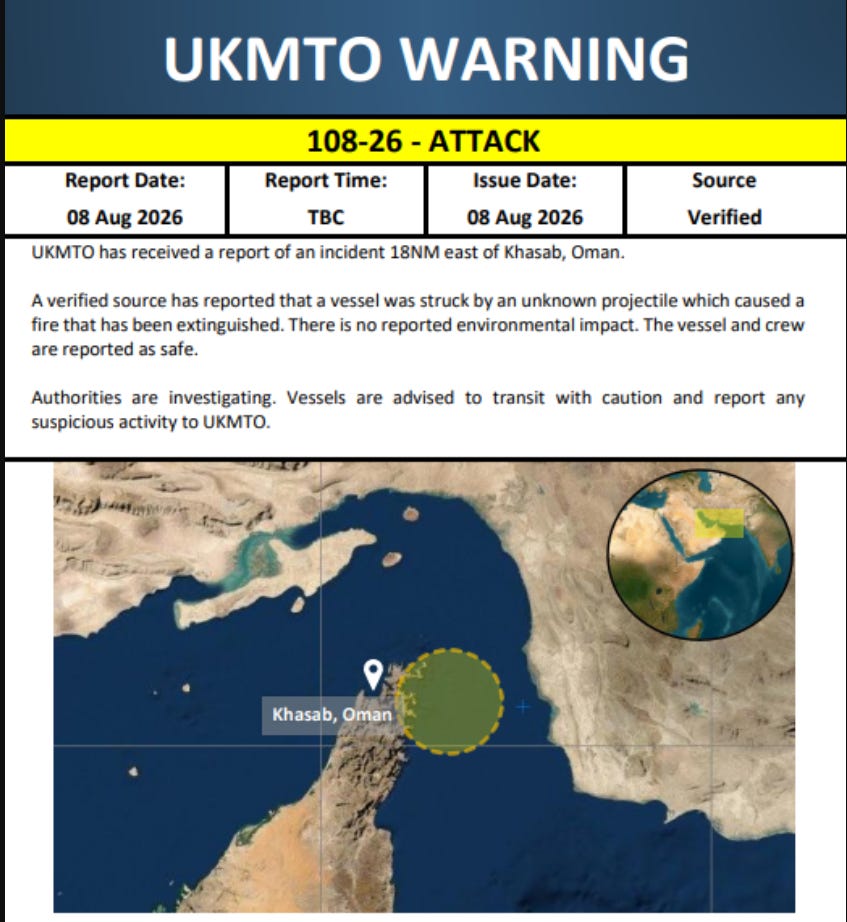
As this goes to publication Saturday morning, there are reports of attacks on vessels transiting through the Strait of Hormuz, including one verified by the UK’s Maritime Trade Operations (UKMTO), which obviously puts any “deal” at risk:
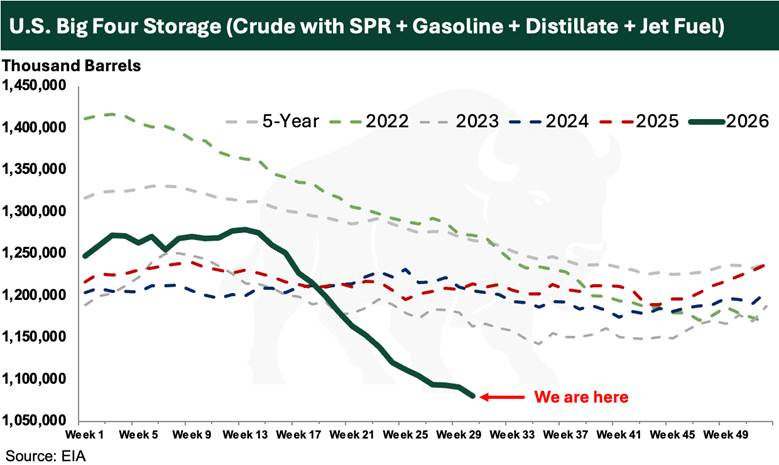
Meanwhile, U.S. petroleum inventories continued draining. This week’s EIA weekly report showed a surprise 2.5 million barrel commercial crude build, but the SPR drew another 2.8 million barrels to a fresh multi-decade low, gasoline fell 1.6 million barrels to 7% below the five-year average, and distillate fell 3.5 million barrels to 12% below the five-year average:
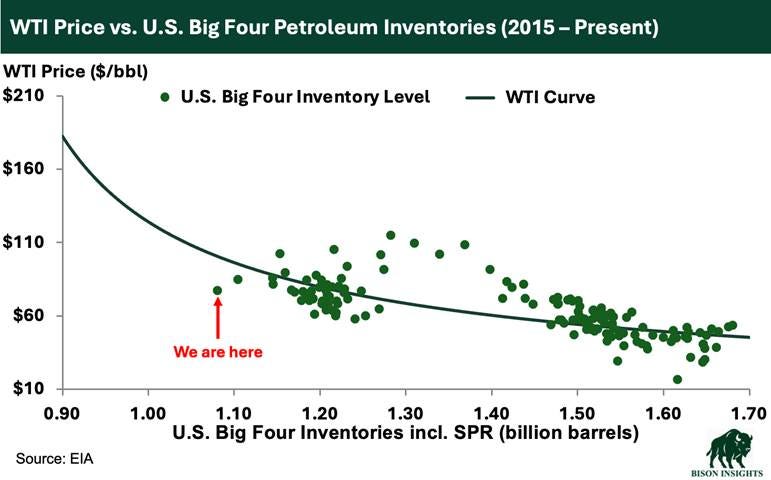
Inventory levels like these have historically been associated with much higher oil prices. The gap between the two is the market’s confidence that a Hormuz resolution is coming. As we are seeing this morning, this confidence in a deal may be misplaced:
In the meantime, the oil supply response to low inventories and supply risk remains modest. U.S. oil rigs rose by 3 to 454 this week per Baker Hughes, grinding higher for several weeks now, but producers are clearly not rushing to drill their way into a disruption that could resolve on a headline or Trump Truth Social post.
Where does this leave the oil market? Short term, headline-driven volatility in both directions as the Hormuz negotiations drag on. Medium term, the picture has not changed: ultra-low global inventories, an SPR with less capacity to cushion the next disruption, U.S. products well below normal, and Iran positioned to maintain control of Strait of Hormuz oil flows - and limit them - even under a deal. This all adds up to medium term higher prices, in my view, supported by inventory levels that alone would call for much higher prices.
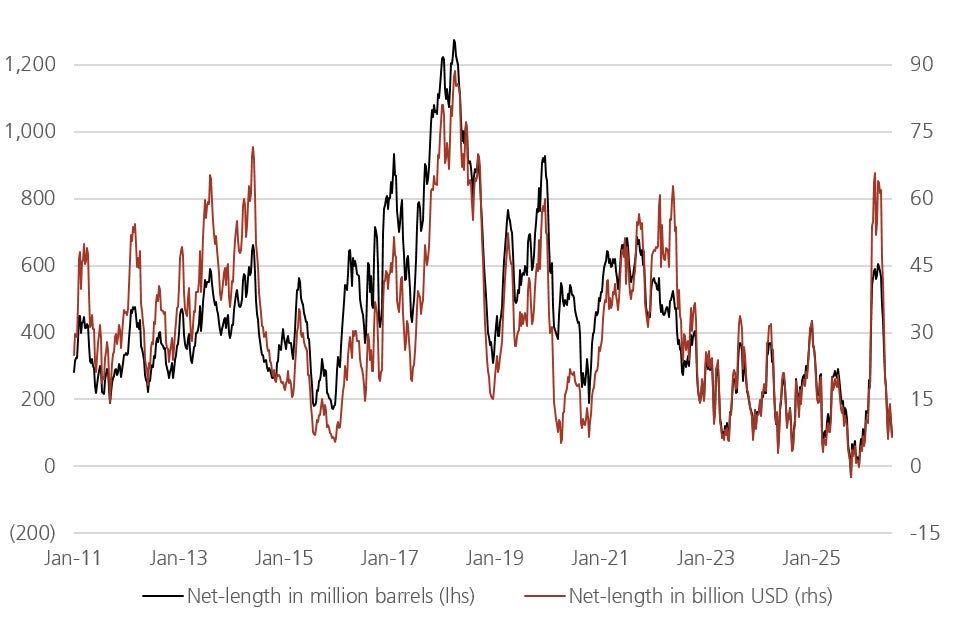
Net speculative positioning in oil futures markets shows something similar, with positioning near multi-decade lows despite low inventory levels, constrained supply, and active attacks on oil tankers happening right now. If speculators return to the oil futures market, or if shortages manifest, prices could rise rapidly like they did in March:
Even in the current depressed (dare I say suppressed?) oil price environment, I continue to find deeply discounted value in the sector, which I highlight here on Bison Insights. In particular, I’ve shared updates recently on a top idea at a large discount to peers, with high performing wells, an active buyback, and recent compelling tuck-in acquisitions. And updated well results are driving the share price higher of this discounted small cap oil & gas producer, which I flagged in the Bison Insights chat prior to Q2 earnings based on public data, and published an article confirming after earnings.
Bison Insights Portfolio Tracker
The tracker shows how the ideas have increased as a group over time, with each idea weighted at the time of publication based on its risk profile and my conviction level, translating the above single-idea performance into a composite:
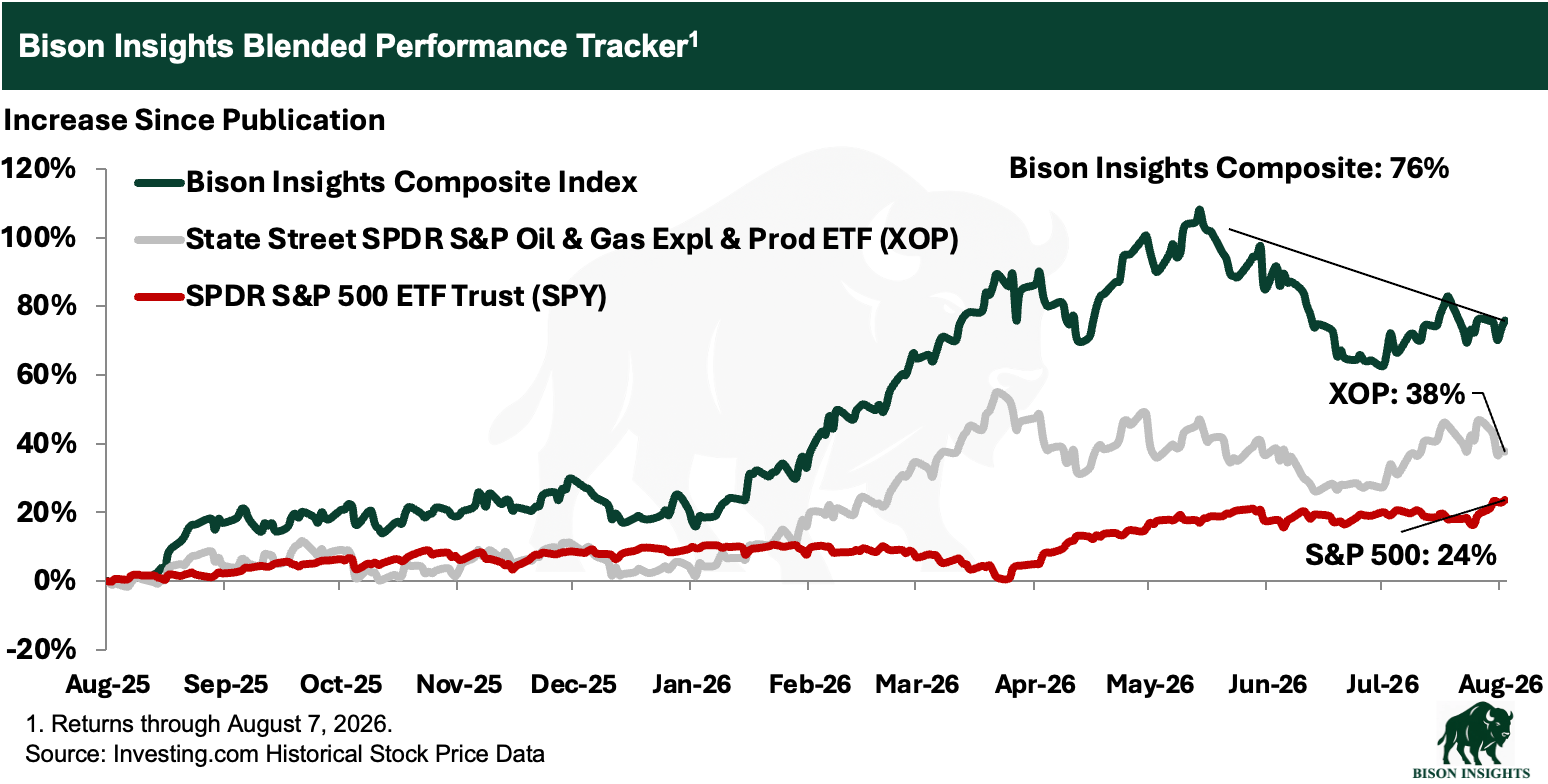
My research process has been honed over nearly two decades of professional energy equity investing. Here on Bison Insights, I share my thoughts on energy markets and specific securities. These have mostly done very well so far since Bison Insights was launched, as you can see above. You can also see that I honestly and fairly represent these, including the inevitable poor performing ideas and difficult days and weeks that come hand in hand with the real-life performance of publicly traded securities. You can see more about this below.
Recent Media
While I’ve been fortunate to appear on a number of podcasts and financial TV shows, I think this particular interview is worth watching if you haven’t yet. It is focused on my investment process and how it is substantially differentiated:
*Disclaimer: I own shares of these companies. This material is provided for informational and educational purposes only and is not intended to be a recommendation to buy or sell any security. Investing involves risk, including the potential for loss. Please conduct your own due diligence and consult a financial advisor before making any investment decisions.